GoWork — AI-Powered Multi-Subject Personal Tutor
Conversational mobile learning ecosystem engineered with Flutter, OpenAI GPT orchestration, custom vector embeddings, and Retrieval-Augmented Generation (RAG).
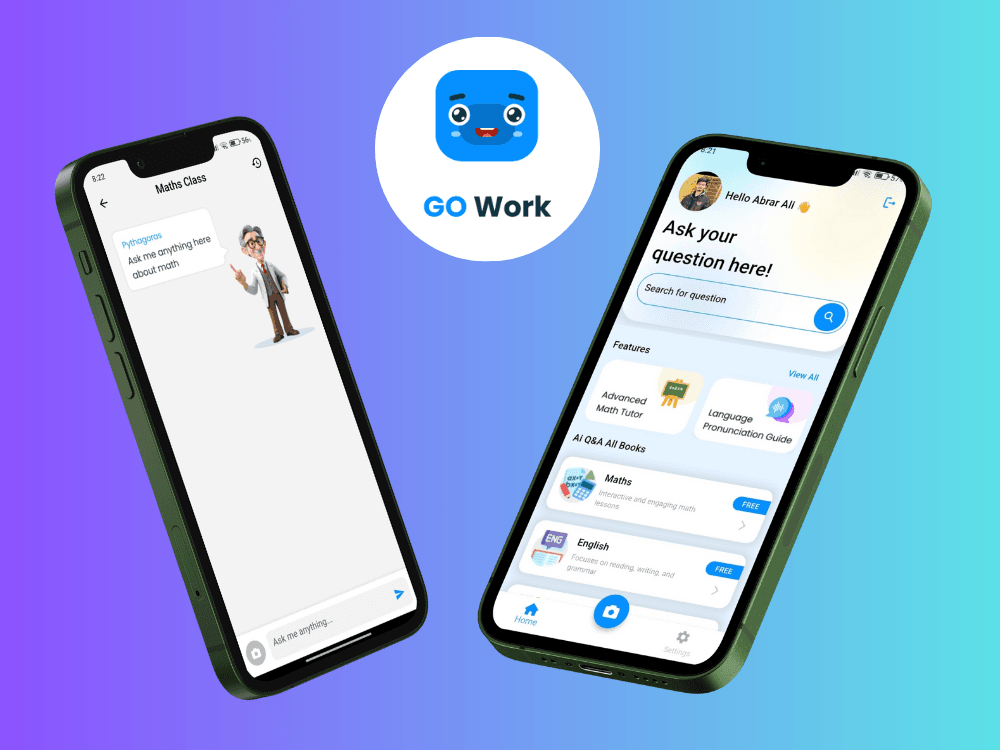
GoWork is an AI-native mobile educational platform built for iOS and Android that transforms passive textbook studying into an interactive, Socratic tutoring experience. Engineered by NEURALXCIPHER (PRIVATE) LIMITED using Flutter, Node.js, OpenAI APIs, and a custom Retrieval-Augmented Generation (RAG) vector pipeline, GoWork delivers grounded, curriculum-aligned step-by-step explanations with real-time token streaming.
From RAG architecture blueprint to dual-platform iOS & Android production builds
Perceived response latency via SSE streaming pipeline
Zero frame drops during live Markdown and formula rendering
Domain Background
Students across secondary and university levels struggle with one-size-fits-all learning materials and generic AI chatbots that simply output final answers without teaching underlying concepts—or worse, hallucinate formulas. The client commissioned neuralXcipher to architect a dedicated mobile AI tutoring companion capable of switching pedagogy styles across STEM, humanities, and language subjects.
Why Standard Approaches Failed
Direct, unguarded calls to Large Language Models result in high latency (5–10 second waits before text appears), hallucinated academic facts, lack of curriculum grounding, and raw API key exposure risks on mobile clients.
Non-Negotiable System Targets
- Deliver a unified 60fps iOS and Android mobile application with zero UI blocking during live token streaming.
- Ground AI responses in verified subject-matter embeddings via a custom RAG retrieval layer.
- Maintain conversational memory across multi-turn study sessions without exceeding token context budgets.
- Ensure strict API security through an authenticated Node.js middleware gateway.
How neuralXcipher Engineered the Solution
We engineered a modular Flutter client paired with a Node.js AI orchestration backend and a vector embedding store. When a learner asks a question or uploads a study prompt, the backend computes query embeddings, retrieves top-K curriculum passages via cosine similarity, injects Socratic system guardrails, and streams tokens over Server-Sent Events (SSE) directly into a custom incremental Markdown/LaTeX Flutter renderer.
Layered Engineering Specification
Four-tier RAG and streaming mobile architecture separating client presentation from vector retrieval and LLM inference.
Renders real-time streaming Markdown, code blocks, subject personas, and persistent local study history.
Protects LLM credentials, enforces rate limits, compresses sliding-window chat history, and manages SSE streams.
Chunks subject-matter reference documents and retrieves high-relevance context snippets per student query.
Executes grounded prompt completions and persists user progress, bookmarks, and topic mastery.
Core Capabilities Shipped
Curriculum-Grounded RAG Pipeline
Retrieves verified subject context before generating responses, dramatically reducing academic hallucinations.
Real-Time SSE Token Streaming UI
Sub-second time-to-first-token streaming with smooth incremental Markdown and formula rendering at 60fps.
Multi-Subject Pedagogical Personas
Specialized tutoring modes for Mathematics, Computer Science, Sciences, and Languages with guided hint progression.
Context-Window Memory Summarization
Rolling conversation summarization preserves long-term student context while minimizing token consumption costs.
How We Solved Edge-Case Bottlenecks
Preventing UI jank in Flutter when parsing and re-laying out complex Markdown and code blocks 20+ times per second during token streaming.
Implemented a debounced token buffer synchronized with Flutter frame callbacks and isolated chat message subtrees with RepaintBoundary widgets.
Balancing deep multi-turn conversation context against LLM token cost and latency limits.
Built a sliding-window context manager that retains recent turns verbatim while compressing older turns into compact semantic summaries.
- Zero client-side LLM API keys; all requests authenticated via signed backend tokens.
- Sub-second perceived response initiation via Server-Sent Events (SSE) token streaming.
- Offline access to saved study threads and bookmarked explanations via local caching.
- Cross-platform Flutter mobile application (iOS & Android)
- Node.js RAG & OpenAI streaming orchestration backend
- Vector embedding ingestion pipeline and prompt guardrail templates
- Production release builds and technical documentation
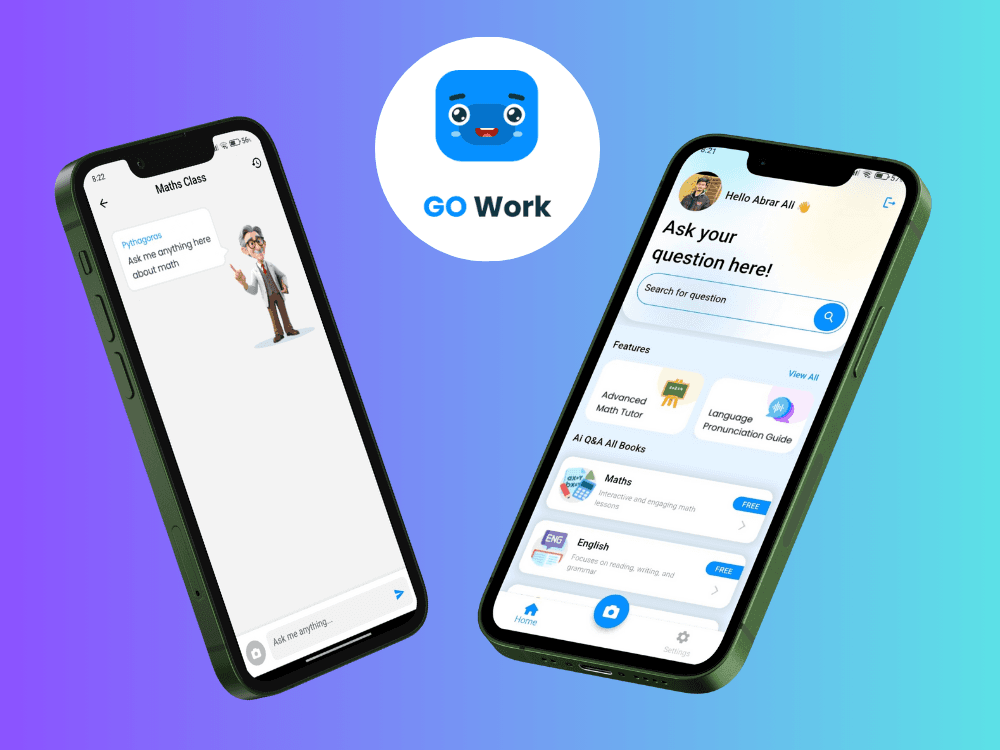
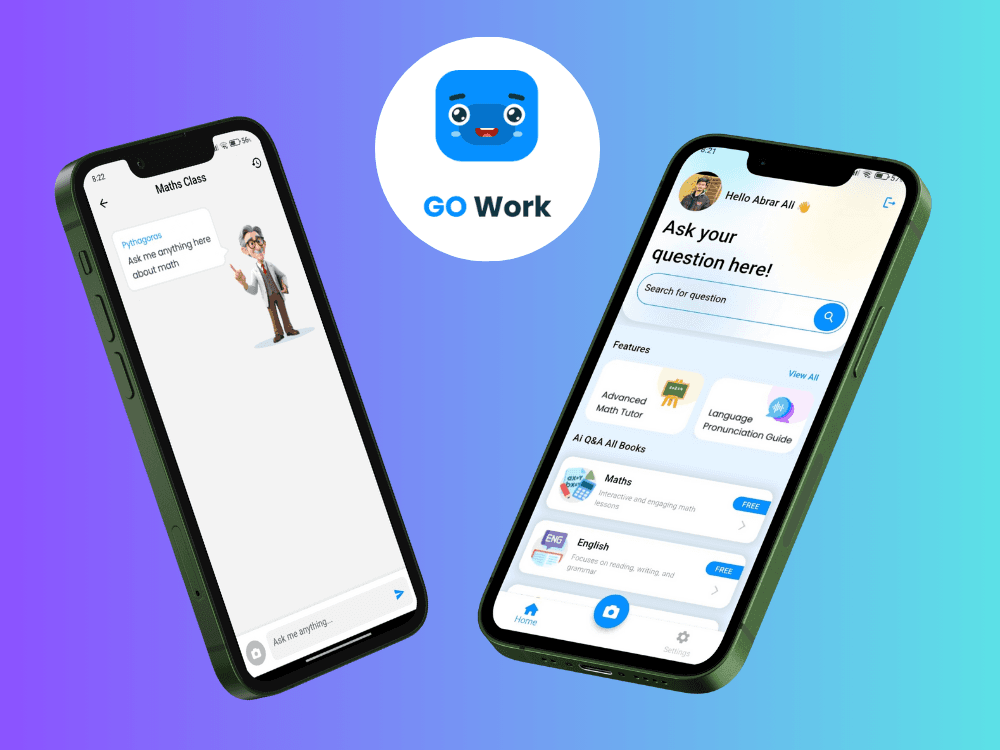
Production Interface Gallery
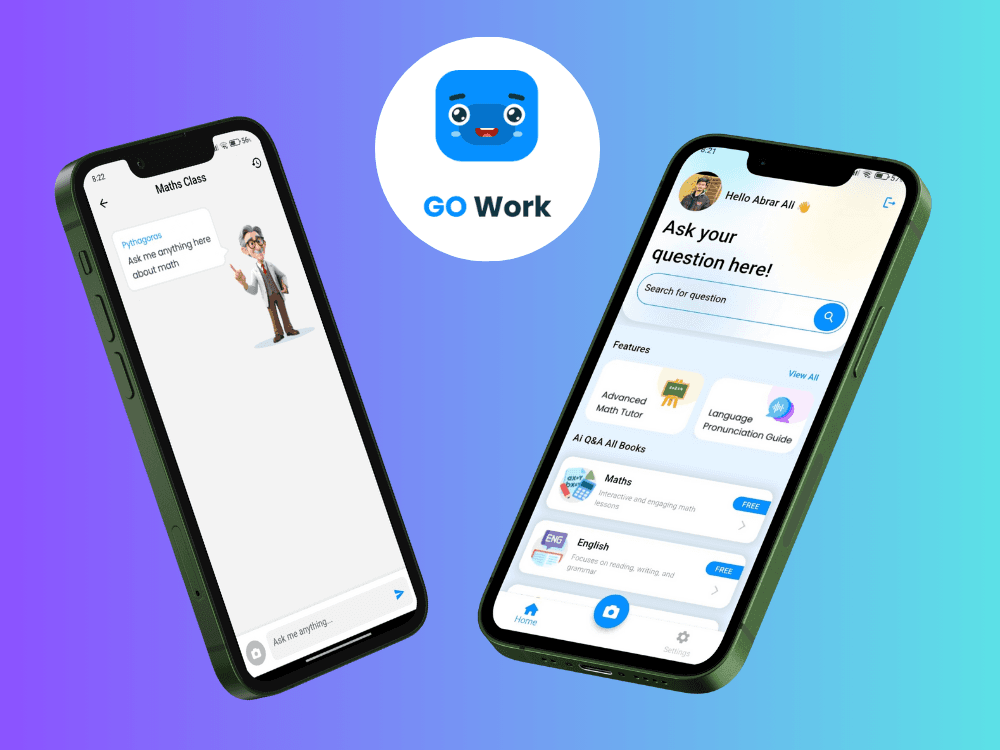
Hardware-accelerated 60–120fps iOS, Android, Wear OS, and Web applications engineered from a single, strictly-typed Dart codebase.
Production AI copilots, Retrieval-Augmented Generation (RAG) knowledge systems, and low-latency streaming LLM interfaces.
High-concurrency Node.js, NestJS, PostgreSQL, and Supabase backends engineered for sub-100ms p95 latency and strict security.
Published open-source Flutter SDK (v1.1.0) under verified publisher neuralxcipher.com featuring a custom GraphQL engine, two-tier LRU + TTL caching, and exponential backoff.
Unified super-app marketplace connecting local merchants, service freelancers, and consumers across Spain and Latin America.
All-in-one digital publishing and self-development mobile ecosystem with lock-screen background audio, custom eBook reader, and curated magazines.
Building an AI-Native Mobile Product or RAG Copilot?
Partner with the engineering team behind GoWork to architect hallucination-resistant RAG pipelines and 60fps streaming Flutter interfaces.